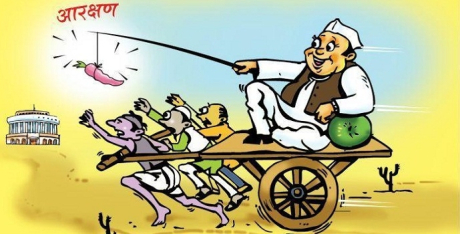
Generally in our country we see political parties make so many promises just before elections to woo the innocent voters. Most of the times, those promises are beyond any practicalities. Once the elections are over, the same politicians offer so many excuses for not implementing the poll promises.
People too forget them in no time and satisfy with whatever they get from their leaders. This is all just like a trick played by a mother who tries to send her truant son to school. One such classic example is the promise made by Andhra Pradesh Chief Minister to provide reservation to those Dalits who convert into Christianity. It is the common knowledge of even a layman that our Constitution doesn’t allow any such reservation.
First, let’s recollect the meaning of Dalit. A Dalit is a member of the lowest class in India, whom those of the four main castes were formerly forbidden to touch. In Indian culture, Dalits are also referred to as ‘Panchamas’ i.e. people who do not belong to any of the Four prominent groups namely Brahmanas, Kshatriyas, Vysyas and Sudras.
People who are engaged in works such as making arrangements for funeral of dead bodies, tanning of animal hides, cleaning septic tanks, etc are included in this group. They were oppressed and exploited to the maximum extent by people belonging to other four groups.
After getting independence, plight of these people was highlighted by intellectuals like Dr. B.R. Ambedkar and special provisions were made in our Constitution to provide them with an opportunity to grow along with other classes of people in the society. Accordingly reservations in education, jobs and politics were introduced for the people who belong to Scheduled Castes.
While making this provision, the architects of our constitution clearly stated that these reservations are applicable only to those oppressed caste people who follow Hindu religion. Either in Christianity or Islam, caste system doesn’t exist at all and there is no question of exploitation based on one’s caste. Later Sikh and Buddhist religions were also included in this list. As such, backward caste people who have faith in any one of these three religions are entitled to reservations. If they convert to Christianity or Islam, automatically they lose the privilege of reservation.
But Dalits who converted to Christianity have been agitating to include them in Scheduled Caste list. Those who support them argue that their social status doesn’t change when they change their religious faith.
Very important point to be noted here is that people belonging to certain castes have been included in a Schedule because they were discriminated by the society and exploited in various ways. As they could not develop at par with other sections of people, our Constitution came to their rescue and granted them certain privileges.
If we study the present topic , i.e. (Aren’t Dalit Christians eligible for reservations?) Keeping the above mentioned facts in view, we can easily arrive at a conclusion. When people change their religious faith, they will come out of the influence of their previous religion. They are no more Dalits. As such, they will be freed from certain taboos and superstitions, if any, existing in their old religion. Hence, there is no need for any support from the statute.
If Dalit Christians are given reservations, it will definitely affect the interests of people who do not change their religious faith. Further, the matter is referred to a Constitutional Bench to study various implications in implementing the same. Till the Supreme Court issues clear cut guidelines, it is impossible to provide reservations to dalit Christians.
Hence, we can conclude that A.P. chief minister’s promise is far away from reality and cannot be realized.
Authored by Venkata Seshasai Deevi.